Secret Service Freezes $12M Crypto
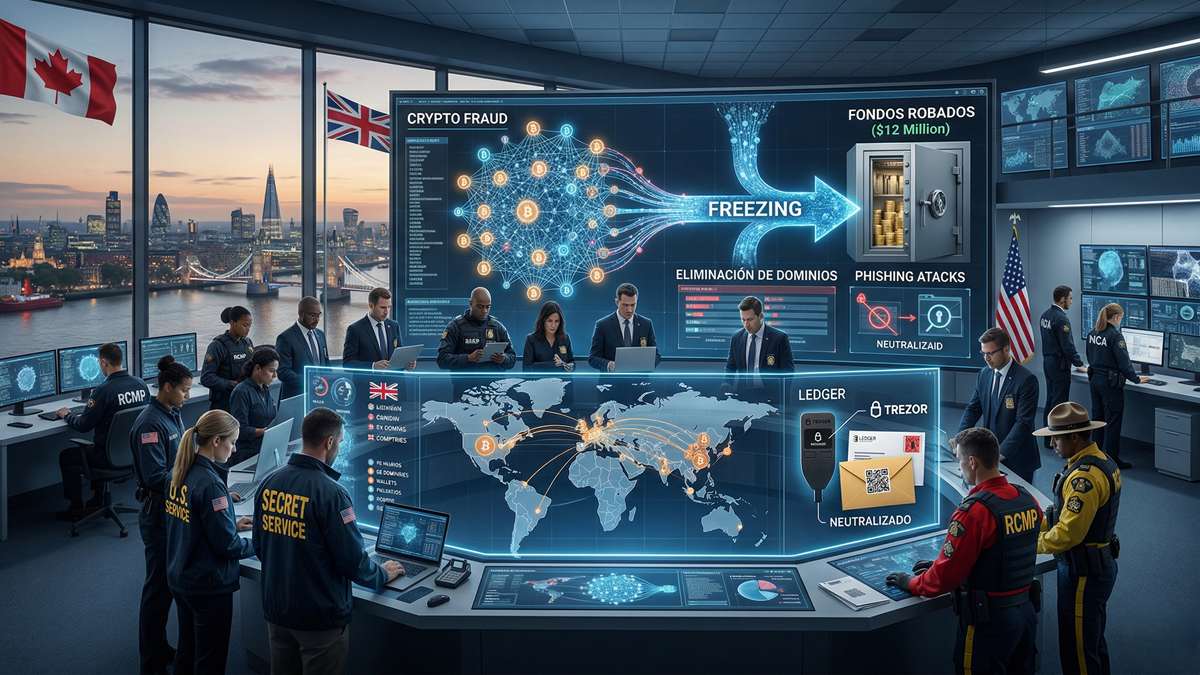
The U.S. Secret Service has made a significant breakthrough in the fight against cybercrime, with the secret service freezes crypto worth $12 million in a global fraud crackdown. This operation, dubbed \"Operation Atlantic,\" was a joint effort with agencies from the United Kingdom and Canada.
Operation Atlantic: A Global Effort
Operation Atlantic has resulted in the disruption of over $45 million in cryptocurrency fraud, with $12 million in stolen funds frozen and over 120 fraudulent domains taken down. The operation also identified 20,000 affected wallet addresses across 30 countries, highlighting the global nature of the problem.
Combatting Sophisticated Attackers
Phishing Scams and Physical Mail
The attackers used sophisticated methods, including approval phishing scams and even physical mail to impersonate brands like Ledger or Trezor. This reinforces the need for global cooperation to mitigate risks and protect the integrity of investors\' digital assets.
Blockchain Traceability: A Key Tool for Justice
The success of Operation Atlantic demonstrates that blockchain traceability is a key tool for justice. Users must remain alert to requests for scanning QR codes or suspicious links, as these can be used to steal sensitive information.
Key Takeaways
- The U.S. Secret Service has frozen $12 million in crypto as part of a global fraud crackdown.
- Operation Atlantic has disrupted over $45 million in cryptocurrency fraud.
- Blockchain traceability is a key tool for justice in combating cybercrime.
- Global cooperation is necessary to protect the integrity of investors\' digital assets.
Frequently Asked Questions
What is Operation Atlantic?
Operation Atlantic is a joint effort by the U.S. Secret Service and agencies from the United Kingdom and Canada to combat cybercrime and disrupt cryptocurrency fraud.
How can I protect myself from phishing scams?
To protect yourself from phishing scams, be cautious of requests for scanning QR codes or suspicious links, and never provide sensitive information in response to unsolicited emails or messages.