PeckShield Flags $52M March Exploit Damage
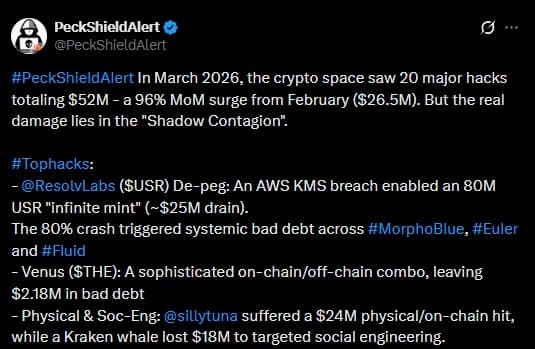
PeckShield flags $52 million in March exploit damage across 20 major incidents, with the attack on Resolv Labs being the most significant, resulting in over $25 million in losses. PeckShield reported a 96% increase in losses compared to February.
March Exploit Damage: A Growing Concern
The $52 million in losses is a significant increase from the $26.5 million recorded in February, with 20 incidents of variable magnitude. The most severe episode was the attack on Resolv Labs, which resulted in the loss of over $25 million in USR stablecoins.
PeckShield's Findings: Shadow Contagion and Systemic Debt
Shadow Contagion Explained
PeckShield warned that the real damage from exploits involves more than immediate monetary loss, citing the phenomenon of shadow contagion. The 80% collapse in USR's value generated systemic debt across the Morpho Blue, Euler, and Fluid protocols.
Key Incidents and Attacks
- The Resolv Labs attack, resulting in over $25 million in losses
- The theft of approximately $24 million in Aave Ethereum USDC, carried out through a physical attack
- The Balancer protocol's closure of Balancer Labs, citing the aftermath of the $128 million exploit in November 2025
Key Takeaways
- PeckShield reported $52 million in March exploit damage across 20 incidents
- The attack on Resolv Labs resulted in over $25 million in losses
- Shadow contagion and systemic debt can have far-reaching consequences for the DeFi ecosystem
- The consequences of exploits can drive entire projects into collapse
Frequently Asked Questions
What is shadow contagion?
Shadow contagion refers to the phenomenon where the impact of an exploit is amplified, generating systemic debt across connected protocols.
How can exploits affect the DeFi ecosystem?
Exploits can have far-reaching consequences, including the collapse of entire projects, as seen with the Balancer protocol's closure of Balancer Labs.