Flare Unveils Plan Shift MEV Into Base Layer
Flare Unveils Plan Shift MEV Into Base Layer
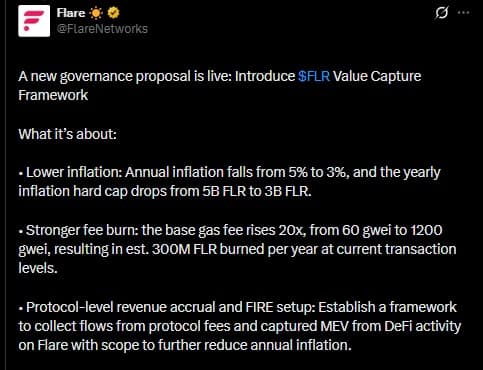
Flare unveils plan to shift MEV into the base layer, capturing maximum extractable value at the protocol level and redirecting it back into its ecosystem, reducing annual inflation from 5% to 3%.
Introduction to MEV and Flare's Proposal
Maximum extractable value (MEV) represents a considerable pool of revenue, with external estimates placing annual figures in the tens of millions on networks like Arbitrum, over $500 million on Ethereum, and up to $1 billion on Solana. Flare's proposal seeks to redirect those resources toward the FLR token's own economy.
Redesigning the Flare Economy
The plan contemplates a three-stage redesign of the block-building process, with the creation of the Flare Income Reinvestment Entity (FIRE) to manage captured revenue and reduce FLR supply through buybacks and burns on the open market.
Benefits of Flare's MEV Capture
By capturing MEV at the protocol level, Flare aims to reduce annual inflation from 5% to 3% and increase estimated burns from approximately 7.5 million to 300 million tokens per year. This would make Flare one of the first layer-1 blockchains to capture MEV directly at the protocol level.
Impact on FLR Token Economy
- Annual inflation reduction from 5% to 3%
- Estimated burns increase from 7.5 million to 300 million tokens per year
- Base gas fee increase from 60 to 1,200 gwei
Key Takeaways
- Flare's proposal captures MEV at the protocol level, reducing annual inflation
- Estimated burns increase from 7.5 million to 300 million tokens per year
- Flare's FIRE entity manages captured revenue, reducing FLR supply
- Base gas fee increase from 60 to 1,200 gwei
Frequently Asked Questions
What is MEV and how does it affect the FLR token economy?
MEV represents a considerable pool of revenue, and Flare's proposal seeks to redirect those resources toward the FLR token's own economy, reducing annual inflation and increasing estimated burns.
How will Flare's MEV capture affect the network's transaction fees?
Despite the base gas fee increase from 60 to 1,200 gwei, a standard transaction on the network would cost a fraction of a cent, making it still relatively cheap.