Bitcoin Hashrate Breaks Multiyear Trend
Bitcoin Hashrate Breaks Multiyear Trend
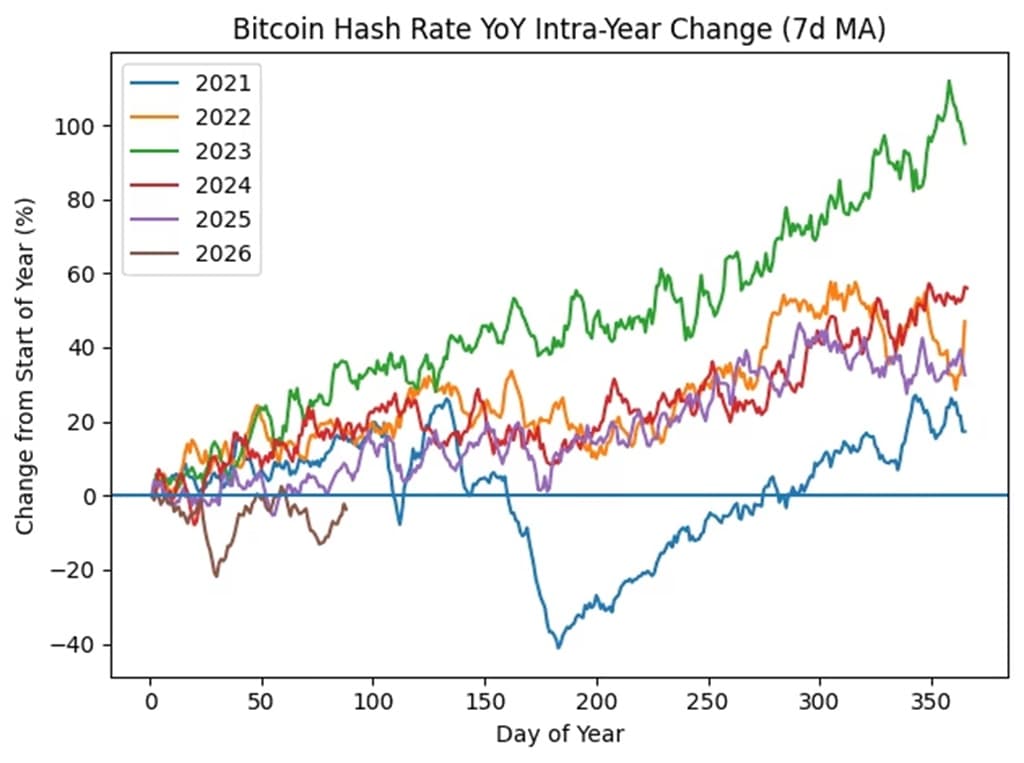
Bitcoin's hashrate has dropped for the first time in six years, breaking a five-year streak of double-digit growth, with the total computational power securing the network falling around 4% so far this year. Bitcoin hashrate breaks multiyear trend as miners reallocate resources.
Hashrate Decline and Economic Factors
The driving factor behind the decline is primarily economic, with production costs near $90,000 per Bitcoin and the spot price hovering around $67,000, resulting in negative operating margins. This has led several public miners in the United States to redirect capital toward artificial intelligence and high-performance computing infrastructure.
Impact on Mining Operations
- Production costs: $90,000 per Bitcoin
- Spot price: $67,000
- Operating margins: negative
Network Decentralization and Benefits
The exit of large miners could benefit network decentralization, as listed mining companies represent more than 40% of global hashrate. A reduction in their relative weight would allow for a wider geographic distribution of computing power, making the network more resilient.
Hashrate Recovery and Future Outlook
Hashrate could recover to 1.8 ZH/s by year-end, though that estimate depends on Bitcoin approaching $100,000 again. This recovery would be driven by increased investment in mining operations and a more favorable economic environment.
Key Takeaways
- Bitcoin's hashrate has dropped for the first time in six years, breaking a five-year streak of double-digit growth.
- The decline is primarily driven by economic factors, including negative operating margins.
- The exit of large miners could benefit network decentralization and make the network more resilient.
- Hashrate could recover to 1.8 ZH/s by year-end, depending on Bitcoin's price.
Frequently Asked Questions
What is the current state of Bitcoin's hashrate?
Bitcoin's hashrate has fallen around 4% so far this year, sitting near 1 zettahash per second (ZH/s).
How will the decline in hashrate affect the network?
The decline in hashrate could lead to a more decentralized network, as large miners exit and smaller miners take their place, making the network more resilient.