Bitcoin Developers Consider Freezing Satoshi-Era Coins
Bitcoin developers consider freezing satoshi-era coins to counter looming quantum threats, sparking debate in the community. Bitcoin developers are analyzing a proposal to protect the network.
Introduction to BIP-361
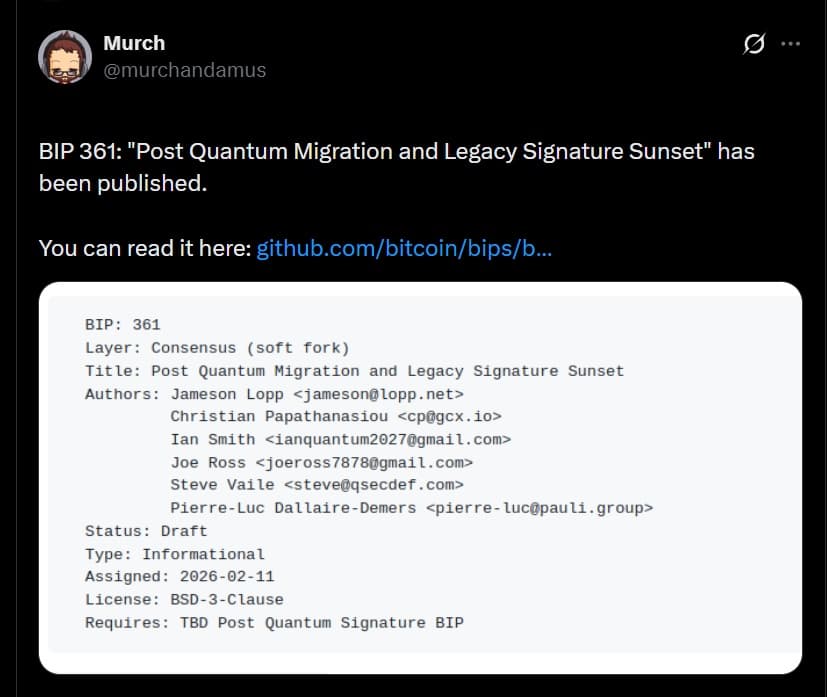
A group of developers led by cypherpunk Jameson Lopp presented proposal BIP-361, an upgrade scheme designed to protect the network against the threat posed by quantum computers. Approximately 34% of Bitcoin’s total supply, around 6.9 million coins, remains in legacy addresses vulnerable to this type of attack.
Quantum Threats and Bitcoin Security
The proposal builds on previously introduced work, BIP-360, which introduced a more secure address type called Pay-to-Merkle-Root (P2MR), comparable to Taproot but with greater cryptographic resistance. Quantum-resistant and post-quantum cryptography are essential for the future of Bitcoin.
The Three-Phase Plan
- Prohibit sending new funds to legacy addresses
- Disable legacy signatures after a certain period
- Implement a recovery mechanism based on zero-knowledge proofs
Community Response and Financial Sovereignty
The Bitcoin community’s response was immediate and largely critical. Phil Geiger, from Metaplanet, summed up the contradiction precisely: “We have to steal people’s money to prevent it from being stolen.” The financial sovereignty of users is a fundamental principle of Bitcoin.
Key Takeaways
- Bitcoin developers propose freezing satoshi-era coins to counter quantum threats
- The proposal sparks debate in the community over financial sovereignty and protocol protection
- Quantum-resistant cryptography is essential for the future of Bitcoin
- The proposal remains a topic of discussion with no active implementation
Frequently Asked Questions
What is BIP-361?
BIP-361 is a proposal to protect the Bitcoin network against quantum threats by freezing satoshi-era coins.
Why is the community critical of the proposal?
The community is critical because the proposal violates the principle of financial sovereignty and could set a precedent for future interventions.